
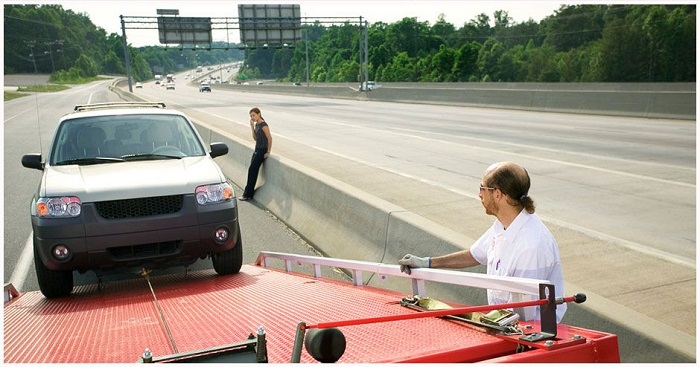
Calling a tow truck is an important procedure that requires knowledge of certain rules and nuances to ensure safety and avoid damage to your vehicle. The process involves several steps, from submitting a request to properly securing the vehicle to the tow truck platform, which significantly impacts the safety of the vehicle. Learn more about car towing at this link.
Steps of Calling a Towing Service: Tips and Nuances
When calling a tow truck, it’s important to properly prepare and consider all the specifics of the situation. The more clearly and concisely you formulate your request, the faster and more efficiently the assistance will be provided. The first step is to determine the exact location of the vehicle so the service operator can promptly dispatch equipment. It is also recommended to include landmarks or identifying features if the area is difficult to recognize on a map.
The next step is to explain the circumstances of the call. You should describe the reason for the towing, the condition of the vehicle, and the presence of specialized equipment or cargo, which may influence the choice of tow truck type. It’s also important to clarify any special requirements or time constraints you have – this will help the service staff choose the most appropriate option.
Practical Recommendations for Properly Securing a Vehicle on a Tow Truck Flatbed for Safe Transport
This article provides practical recommendations to help drivers and specialists properly secure a vehicle on a tow truck flatbed and ensure it is securely fastened while in transit.
Basic Principles of Properly Securing a Vehicle on a Tow Truck
- Vehicle Preparation: Before securing, ensure all doors, hood, and trunk are closed. Turn off lights and check for fuel or oil leaks.
- Using Proper Tie-Down Devices: Use chains, cables, or straps designed for cargo transportation. Do not use worn or damaged tie-downs.
- Location of tie-down points: Secure the vehicle to pre-determined, secure points on the vehicle body as recommended by the manufacturer or towing service.
Step-by-step instructions for securing the vehicle
- Securing the front wheels: Use straps or chains, pulling them through the rims or special fasteners. Ensure the vehicle is securely fastened to prevent it from shifting forward or backward.
- Rear Wheel Securing: Secure the rear wheels in the same manner, avoiding excessive tension, which could damage the rims or bodywork.
- Additional Securing: For increased safety, use additional tie-down points, especially during long-haul or intercity transport.
Final Recommendations and Conclusion
Properly securing your vehicle on the tow truck platform is essential for a safe and smooth journey. It is important to use appropriate tie-down devices, select the correct tie-down points, and secure it in accordance with the manufacturer’s recommendations.
Remember that following all safety instructions and using care during tie-down will help prevent damage to your vehicle and ensure the safety of road users. If in doubt, consult a specialist or refer to the instructions to ensure the safest and most efficient transport.